

Overview
The Clear and Resync feature allows you to:- Perform a quick synchronization of recent changes
- Complete a full data refresh by clearing and reimporting all tickets
- Resolve synchronization conflicts or data inconsistencies
- Apply configuration changes that require a full resync
When to Use Clear and Resync
Quick Sync
Use Quick Sync when:- Testing new configuration changes
- Updating recently modified tickets
- Resolving minor sync delays
- Refreshing data after brief connection issues
Clear & Resync
Use Clear & Resync when:- Initial integration setup is complete
- Major configuration changes have been made
- Data inconsistencies need to be resolved
- Switching between PSA systems
- Recovering from extended sync failures
Prerequisites
- PSA integration must be configured and enabled
- You must have permission to manage integrations
- Ensure no critical ticket updates are in progress
- Back up any local ticket data if needed
Steps to Resync
1. Navigate to Integration Settings
Go to https://app.msportal.ai/settings/integrations
2. Access Ticket Settings
Click Configure on your PSA integration to open its setup wizard. Then click the Configure step in the wizard’s step bar. The Ticket Settings card is at the top of that step.
3. Locate Sync Actions
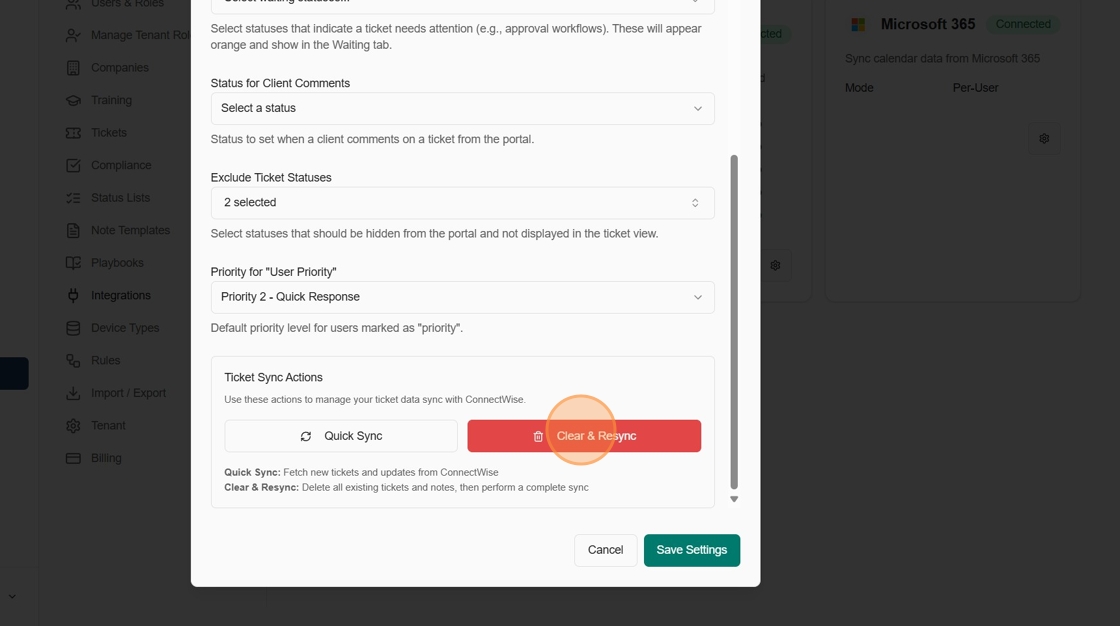
Scroll down to the Sync Actions section, below the Resolution Status Stepper. Here you’ll find two synchronization options: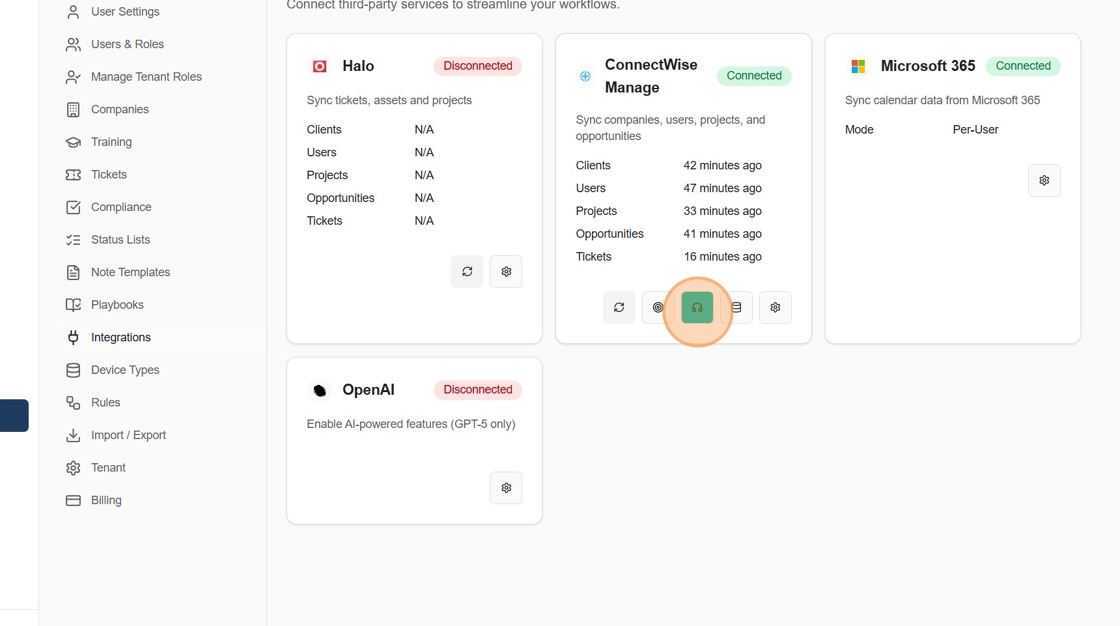
4. Choose Sync Method
Option A: Quick Sync
- Click the Quick Sync button
- Synchronizes only recent changes
- Preserves existing data
Option B: Clear & Resync
- Click the Clear & Resync button
- What happens next depends on your PSA:
Warning: Clear & Resync starts as soon as you click it. There is no confirmation dialog. On ConnectWise and Autotask it deletes all local ticket data for the integration and reimports everything from your PSA. Any unsynchronized local changes will be lost. Tickets in the PSA itself are never deleted.
5. Wait for Completion
 While the sync runs, the button shows a spinner, and a toast confirms the sync has been triggered. The sync continues in the background; refresh the Tickets page after a few minutes to see the reimported data.
What Gets Synchronized
Ticket Data
- Ticket details (title, description, status)
- Priority and categories
- Assigned technicians
- Company and contact associations
- Custom fields (if configured)
- Ticket notes
Related Data
Quick Sync and Clear & Resync only cover tickets. Companies, contacts and time entries sync on their own schedules. To refresh boards, statuses, priorities and types, use Sync PSA Data on the integration instead. See ConnectWise PSA Settings Resync.Post-Sync Verification
After synchronization completes:- Check Ticket Count: Verify the expected number of tickets appears
- Review Recent Tickets: Confirm latest tickets are present
- Test Updates: Make a small change to a test ticket to verify two-way sync
- Check Mappings: Ensure status and priority mappings are correct
- Verify Permissions: Confirm users can access appropriate tickets
Troubleshooting
Sync Takes Too Long
- Check your internet connection
- Verify PSA system is responsive
- Consider using Quick Sync for testing
- Contact support if sync exceeds 30 minutes
Missing Tickets After Sync
- Verify board, queue or team selection in the wizard’s Sync step
- Check excluded status configurations
- Ensure date range settings are correct
- Review PSA permissions
Sync Fails to Complete
- Check PSA API credentials
- Verify integration is enabled
- Review error logs for specific issues
- Try Quick Sync before Clear & Resync
Data Inconsistencies
- Perform a Clear & Resync
- Check field mapping configurations
- Verify time zone settings match
- Review custom field mappings
Best Practices
- Schedule Full Syncs: Perform during off-hours to minimize disruption
- Test First: Use Quick Sync to test configuration changes
- Document Changes: Note what prompted the resync for future reference
- Monitor First Sync: Stay available during initial synchronization
- Regular Maintenance: Schedule periodic full syncs (monthly/quarterly)
Performance Considerations
Quick Sync Performance
- Minimal system impact
- Can be run during business hours
Clear & Resync Performance
- Duration depends on ticket volume
- Best performed during maintenance windows