

Branch preview for PR #1508. These controls are not yet generally available. Screenshots show the unreleased branch UI. The instructions describe the behavior planned for this release.
Before you start
- Open Settings > Users & Roles > Team Roles as MSP staff.
- Create the team role and assign its initial staff using your existing company-team controls.
- You need permission to read Company Users settings to load the roles and staff selectors, and write Company Users settings to change global assignments. Global changes also require an active billing state.
- Saving an automation with a membership action requires write access to both Automation settings and Company Users settings. This workflow selects MSP staff, not customer contacts or Company users.
Make a team role global
1
Open the global settings
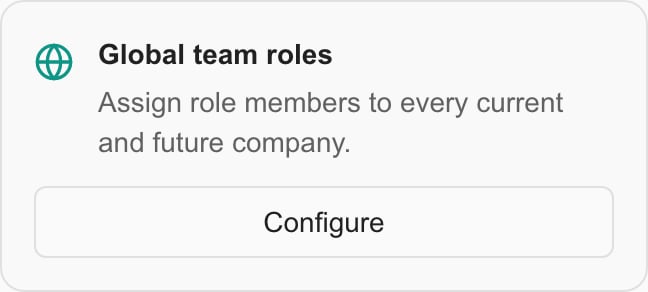
In Team Roles, find Global team roles and select Configure.
2
Review the existing members
Enabling Global collects the staff already assigned to this role at any company. That combined roster will serve every company, subject to existing company-specific exclusions.
3
Enable the role
Turn on the switch for the role. Each switch saves immediately; there is no separate Save button. Wait for Global team role updated before leaving the dialog.
Keep a company-specific exception
Removing a member from one company’s role creates a lasting exception for that company. The person can remain assigned elsewhere. Global inheritance and PSA reconciliation do not silently restore the excluded assignment. Explicitly add the person back to that company’s role to clear their exception. An Add team members automation action also clears the selected person’s exception for the matched company. Turning Global off removes inherited assignments. Original company assignments and company-specific removal exceptions remain. It does not delete staff accounts or the team role.Automate membership changes
Open Settings > Automation > New Rule and configure the trigger, scope and conditions. In Actions, choose: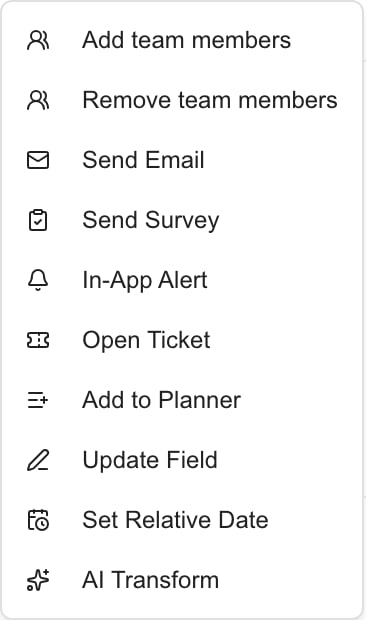
Example: finish an onboarding handoff
- Create a company-specific Onboarding team role and assign the staff handling the handoff.
- Create a rule using an Onboarding Event and choose the completion event appropriate to your workflow.
- Limit the rule to the intended companies and add any necessary conditions.
- Add Remove team members, select Onboarding, and select Remove everyone in this team role.
- Review the rule, save it inactive while preparing the rollout, then enable it when ready.